












The best ski goggles of 2025, tested by editors
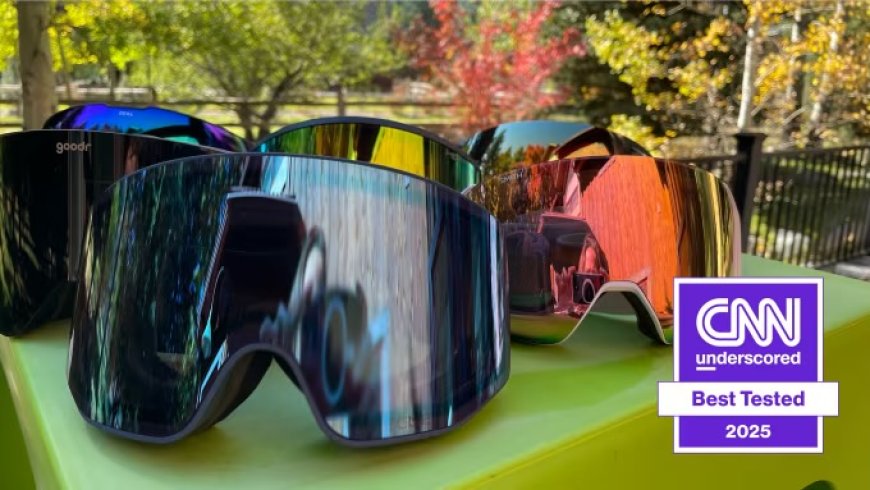
The best ski goggles we tested Best ski goggles: Salomon Sentry Prime Sigma Photochromic Best ski goggles for small faces: Smith Optics 4D Mag S Best budget ski goggles: Goodr Snow G
The best ski goggles are not what they used to be, and that’s a really good thing. As a kid in the 1980s in Colorado, my family skied a lot, and I vividly remember my goggles. The foam was so thin that the plastic frame occasionally nicked my face, the lenses were constantly smudged and scratched, and the lens lighting never seemed to work, regardless of the conditions. They protected my eyes from the elements, but that was about it.
But today, ski goggles are a modern marvel. Now we have various frame shapes to fit different face profiles, interchangeable lenses and laser-sharp optics that are clear enough to read the bottom line on an eye chart. Some even come with bougie cases to protect your investment (because yes, they’re also more expensive now). Ski goggles still protect your eyes, but they aren’t just functional; they’re a statement.
Ski season is coming in hot, so I wanted to find the best ski goggles for you to wear when hitting the slopes this year. To do that, I called in 16 pairs of goggles for review and spent over 2.5 hours pedaling on my Peloton in goggles (just go with it), strapped them on a bunch of different heads and wore them around the house with a variety of ski helmets. I even timed my lens swaps with interchangeable lenses to see which goggles would have you on the ski hill the fastest. When it was all done and dusted, I found the best. Here are the three ski goggles that topped my testing.
Salomon is an old pro when it comes to ski gear, so it’s no surprise that the Sentry Prime Sigma Photochromic goggles crushed my testing process with a pleasing universal fit, superb vision and clarity and a surprisingly delightful magnetic lens protector (the only one in my testing pool).
The Smith 4D Mag S gives you the whole package: an insanely huge field of vision, clear optics and tons of color options to earn those style points. A trim design and flexible frame mean skiers with small faces and features don’t have to worry about drowning in their goggles.
I love a good value, and the Goodr Apres All Day Snow G ski goggles knocked it out of the park with a decent field of vision, easily interchangeable lenses and a high-quality hard-sided case to house everything. The best part is that they’re the most affordable goggles in this test.
Best ski goggles: Salomon Sentry Prime Sigma Photochromic Goggles
Above all else, ski goggles need to protect your eyeballs and help you see while carving through the snow. The Sentry Prime Sigma does all that with amazing clarity and a wide field of vision that helps you see what’s happening in your periphery. While they come in limited colorways, I found them to be small peanuts compared to the overall quality and experience of these goggles.
To start, the Sentry Prime Sigma comes with two lenses: a photochromic lens and a regular low-light lens. Both boast Salomon’s Sigma technology, which claims to boost color contrast on the snow so you can easily see terrain variations and features. I couldn’t rely on even snow conditions during testing, so I took all the ski goggles on multiple walks through a multitude of full-sun and shade environments. Each time, I was delighted by the clarity and defined contrast of the Salomon goggles; in this regard, they tied for the top spot alongside the Smith 4D Mag S goggles.
The best part is that the photochromic lens makes that contrast pop even further as it adjusts to various conditions. I specifically took the Sentry Prime Sigmas for a hike along a trail with dappled light and was pleasantly surprised by how quickly the goggles adjusted to the changing conditions. In testing, the lens adjustment took less than 10 seconds. Most of the other goggles in my testing pool don’t have photochromic lenses, so this quick change was a huge bonus, since it’s so efficient.
Caveat: There was a smidgen of glare in extra-bright conditions. The Sentry Prime Sigma goggles have a cylindrical lens that curves from left to right across your eyes but is vertically flat from top to bottom. Sun glare is more common with cylindrical lenses, but they are also more affordable. In this case, it’s a trade-off I’m happy to make.
I also hopped on a Peloton bike for 10 minutes while wearing each pair of goggles to see how well they breathe in a controlled environment. While none of the goggles feel as breezy as bare skin, the Sentry Prime Sigmas did a great job managing body heat. Most higher-end goggles had decent ventilation, but the Salomons were near the top of the pack, breathing better than others at higher price points. I never once felt sweat drip into the goggles, and I totally avoided that clammy, claustrophobic feeling that comes when there’s no ventilation.
While the interchangeable lenses weren’t as easy as on the Burton Anon M5S goggles, I could still manage it while wearing liner gloves (but I needed to ditch my snow gloves to do so). I was also supremely impressed by the features included with the Salomon Sentry Prime Sigma goggles. You get two interchangeable lenses and the kit also comes with a hard-sided storage case and a foldable, lens-shaped magnetic protector to snap on your goggles when not in use. The Salomon goggles were the only ones in my test to include a protector like this. While other goggles did come with interchangeable lenses and high-quality cases, Salomon was the most affordable to include all the bells and whistles.
Bottom line: The Salomon Sentry Prime Sigma Photochromic goggles were at or near the top of every test I ran. The goggles shone the brightest in my visibility and breathability tests, as well as with the bonus features.
Best ski goggles for small faces: Smith Optics 4D Mag S Goggles
If you have a smaller head, fret no more, because the Smith 4D Mag S goggles are here to fit your face. So often, trendy oversized goggle frames swallow smaller features and leave gaps in coverage (like above the nose or around the eyes) so that air billows inside the goggles. This creates a less-than-ideal skiing experience for women or anyone with petite features. But the 4D Mag S goggles are champions for my small-headed skiers. During testing, I tried these frames on five faces — three women and two men — and all proclaimed the fit top-shelf. This was in contrast to other goggles with a universal fit — like the Zeal Optics Cloudfall or the Rudy Project Spincut OTG — that felt a bit large on smaller features. Bonus: They’re available in a Low Bridge Fit for those with a lower nose bridge or higher cheekbones.
And, they work with a variety of helmets. I wore these goggles with three ski helmets by three different brands to gauge whether or not they’d set me up with the dreaded gaper gap, a patch of exposed forehead between the top of the goggles and the helmet. Not only is a gaper gap a source of ski hill mockery, but it also leads to oddly bizarre tan lines. Fortunately, the 4D Mag S was the only goggle in the top three, and one of only 14 in my entire testing pool, to sit flush against all three helmets.
Smith’s BirdsEye Vision is aptly named and I was stoked with how much the lens shape expands the field of vision in these goggles. The 4D Mag S boasts a spherical lens, which means it curves not only horizontally across your eyes but also vertically, giving you extra peripheral vision and less distortion. (Trade-off: It costs more than cylindrical lenses.) Smith also added a curvature along the bottom of the lens, further broadening your field of view. During my testing, I taped an X on the floor and walked towards it until it disappeared. These goggles maintained their peripheral vision longer than almost any other in this test, coming second only to the Zeal Optics Cloudfall.
As with Salomon, the 4D Mag S goggles also come with interchangeable lenses. In this case, you get two lenses with ChromaPop (one regular and one for low-light conditions), a gogglesoc, a goggle bag and a hard-sided case. Thanks to a small turning latch that secures the corners, changing the lenses isn’t quite as easy as the Burton Anon M5S (the easiest of the bunch). But it is more secure, and I’ll never worry about losing my lenses while ragdolling down the slopes.
Finally, I’d be remiss if I didn’t give a nod to the sheer styling of these goggles. I was sent a sample with the white vapor strap and rose gold lens, and they may be the most beautiful goggles I’ve ever worn. Even if rose gold pink isn’t your color, Smith offers these goggles in 11 colors. Chances are, you’ll find a combination you love.
Best budget ski goggles: Goodr Apres All Day Snow G Goggles
Gone are the days of $25 ski goggles, but not everybody skis enough to warrant a premium, full-service goggle like the Salomon or Smiths above. If that’s you, I can’t recommend the Goodr Apres All Day Snow G goggles enough. I was delightfully surprised by the all-around lens quality, style and included features that come with the Snow G — and for less than half the cost of most goggles in this guide. Sure, there are trade-offs with peripheral vision, lens clarity and overall foam quality. But I’m willing to bet those are concessions most weekend warriors are willing to make.
For starters, it’s rare to get interchangeable lenses at this price. And yet, Goodr comes through. The Snow G includes two magnetic lenses: one for bright light and one for low light. Both snap onto the frame similarly to the Anon M5S, which is code for “super easy.” Like the Salomon goggles, I could make the lens swap while wearing only my liner gloves. There aren’t any levers or snaps to secure the lens and the magnets don’t feel as strong as those on more expensive frames, but it’s still a nice feature to have available. Plus, the Goodr goggles come with a hard-sided storage case — something many pricier models did not include.
The all-black, frameless design has a sleek aesthetic, but if you want to make a bolder statement, Goodr also offers bright pink and orange colorways. The lenses provide the usual basics you need while spending hours on snow: anti-fog treatment, anti-glare coating and UV400 protection. Unlike pricier goggles with premium glass from well-reputed companies such as Zeiss, Goodr opts for a more generic lens, and it showed when I was walking around the neighborhood in my goggles. The Snow G goggles don’t have the same clarity and the field of vision is much smaller, but out of the options clocking in at less than $100, they were the best. And can I once again remind you about that price point?
The goggles felt quite hot during my Peloton bike ride, and the foam is much thinner than what’s found on the other goggles in this test; the Dragon DX3 goggles (another budget contender), as well as many of the more expensive goggles I tested, have a more cushioned fit against your skin. But it’s not uncomfortable and the Snow G fogged up less than the Smith Blazer goggles, yet another one of our budget options.
Bottom line: If you ski a handful of times per year or only hit the slopes for one week-long ski vacation per season, reach for Goodr’s Snow G goggles. With decent visibility, comfort, breathability and style, the quality and performance of these goggles are unmatched at this price point.
How we tested
To find the best ski goggles, I tested everything from comfort and lens clarity to field of vision and ease of use while wearing ski gloves. To do this, I divided testing into four categories: comfort, optics, ventilation and style. From there, I directly compared the features of each pair of goggles through non-standardized outdoor adventure and pre-scripted, standardized tests. Here’s the full breakdown of what I did.
Comfort
- Comfort: I tried all the goggles on to see how they felt sitting against my skin.
- Fit: I tried the goggles on a minimum of three different faces to see how they fit a variety of head shapes and sizes.
- Helmet fit: I also wore the goggles with three different helmets by three brands: Salomon, Flaxta and Giro. I evaluated how they fit with each helmet and whether they left a large gap. I also evaluated how well the strap stayed on the helmet and whether or not it pulled the goggles too tightly against my face.
Optics
- Clarity: I walked outside in various light conditions to see how clear my vision was and how well the lenses adjusted to the light changes.
- Interchangeable lenses: If the goggles came with interchangeable lenses, I timed ourselves on how long it took to swap them out. I also tried doing it while wearing liner gloves and ski gloves.
- Field of vision: I taped an X on the floor and walked towards it while wearing the goggles, determining when it disappeared from my line of sight.
- Lens smudges: I handled the lenses with my hands and determined how easily they smudged, as well as how easily they were to clean.
Ventilation
- Feel: I stood and moved around outside in the sunshine to evaluate how the goggles felt sitting against my skin and to determine whether my face felt hot or clammy.
- Breathability: I wore the ski goggles while pedaling on a Peloton at a moderate clip for 10 minutes to determine whether they’d fog up.
Style
- Colors: I counted how many color options the goggles have available for sale on the website.
- Versatility: I also looked to see if the goggles were available in various frame sizes or shapes for different faces.
- Features: I counted how many additional features (such as extra lenses or hard-sided cases) came with the goggle purchase.
How to choose the best ski and snowboard goggles
Once upon a time, we all skied in sunglasses. While that’s still technically an option and something many backcountry skiers still do, ski goggles are now the accepted norm. That’s because goggles protect your eyes from UV rays from the sun, snow, wind, tree branches and other ski-hill hazards, which makes them invaluable. Because of this, it’s a good idea to understand what to look for when shopping.
First, consider the lens shape. Above, I mentioned two types of lenses: spherical and cylindrical. Cylindrical lenses are flat from top to bottom and curved horizontally, like wraparound sunglasses. They can sometimes have more glare and less peripheral vision, but they usually cost less. Spherical lenses are curved horizontally and vertically, which interferes less with peripheral vision and minimizes lens distortion and glare. However, all good things come at a cost; these cost more.
Secondly, consider how well ski goggles vent. While it may be counterintuitive to think about overheating while playing in the snow, it happens when folks are sedentary, sitting on a chairlift in bright sunlight or stopping for a snack at the top of a run. If the goggles vent poorly, they will likely fog over, which can cause a host of visibility issues on the slopes. When shopping, look for features such as an anti-fog coating and vents along the top and sides of the goggles. You’ll also want to ensure the goggles have double-layered lenses, since those fog up way less than single-layer ones. These days, almost all ski goggles have double-layered lenses, but it’s a good idea to check.
Interchangeable lenses are pricier but way more useful. Since folks ski in various conditions, it’s tough to find one lens to do it all. Lighter lens colors are often better on cloudy days, while darker lenses are better on sunny, bluebird days. If you have interchangeable lenses, the goggles will likely cost more, but you can swap them out to accommodate any light conditions.
In that same line of thinking, it’s worth evaluating photochromic lenses like the Salomon Sentry Prime Sigma Photochromic or Atomic Four Pro HD. Photochromic lenses are an added feature that automatically adjust their tint based on conditions. The downside of photochromic lenses is that they often take a few minutes to fully adjust to the new conditions.
Finally, keep an eye on all of the features that come with your goggles. Almost all ski goggles come with a microfiber bag for storage, but many also include hard-sided cases. This is particularly nice if you throw your goggles in a ski bag with heavier objects like ski boots or helmets. It makes it less likely that they’ll get scratched or ruined. Some brands also include Gogglesocs, small microfiber covers that stretch over the goggle lenses. Brands like Salomon even include magnetic protectors to discourage lens damage.
Other ski goggles we tested
Shady Rays bucks the norm with completely customizable goggles. You choose the frame, the lens and the strap. They do it at a reasonable price too.
The Frontier goggles by Shady Rays were a solid contender for the best budget ski goggles, thanks to a sleek aesthetic and ample customization options. On the brand’s website, you get to pick your frame color, lens color and strap pattern so you can mix and match however you prefer. But the fit isn’t the best. Testers struggled with a decent gap above the bridge of the nose and the width was tight (but tolerable) on three different heads.
The pricing also felt misleading since you only get goggle frames for $84 (and you can’t even check out with just frames). If you want lenses and a strap, the price immediately jumps to a minimum of $139, or $155 if you want a case to put them in.
These were almost one of our top picks, thanks to their stellar fit and styling as well as straightforward interchangeable lenses, but they are just too expensive.
I came within millimeters of including these goggles in our top picks; it was a very close competition. I loved the interchangeable lenses on the Anon goggles and found them the easiest in this test. I also loved the overall fit and styling. Ultimately, they didn’t make the top three due to price, but if you want a high-performing goggle with the easiest interchangeable lens I tested, go for the M5S.
These retro-inspired goggles boast Zeiss lenses — code for clear, crisp optics — along with a snug fit and soft foam that feels great against your face. You even have 10 color options to choose from.
Technically, the Vallon Freebirds work beautifully. They fit well and sat smoothly against my ski helmet. Plus, the Zeiss lenses have great clarity, which is a notable improvement over more affordable options like the Shady Rays or Goodr goggles. At less than $200, they’re a relative bargain, especially compared to higher-priced goggles like the Smiths. But they don’t come with any bells and whistles like extra lenses or a hard case, while the Salomon goggles include both. And while some skiers love the retro styling, others might not.
Another top pair, these goggles were great, but the Salomons are a better value.
These Atomic goggles were also a close contender for the top picks due to their high performance and nods to sustainability; they’re made with 30% to 35% recycled materials. They boast photochromic lenses and the lenses are fairly easy to swap out, although the Anon goggles are easier. And these don’t come with as many features as the Salomons for a similar price point.
These are solid goggles but don't have enough features to earn a top spot, and they're too expensive to be our budget pick.
While these goggles are light on features — no case or interchangeable lenses — I was very impressed with how well the lenses performed across a variety of environments, especially at this price point. I considered adding them as our top pick in the budget category, since they offer better clarity and lens adjustment across a wider range of conditions than the Goodr Snow G. However, they’re still nearly double the price of the Goodrs. Still, if you want better-quality goggles than the Goodr but you’re not ready to drop the big bucks for our other top picks, these are a great choice.
These goggles couldn't stack up to the winning Salomons, even though they cost the about the same.
For a one-lens goggle, these did amazingly well. I thought the lenses had great clarity and the field of vision was in the top half of those I tested. I also liked the aesthetics of these goggles; they look great on your face. But, they cost the same as the Salomons, which include interchangeable lenses and other features that these do not.
These goggles provided some of the best field of vision, but weren't compatible with every helmet I tried.
Hot dang, these are beautiful. The field of vision on the Cloudfall goggles was up there with the Smith 4D Mag S goggles for the best in this test and the Zeiss glass had amazing clarity. I also liked the rail system on the interchangeable lenses; it was unique and fairly intuitive. However, I ran into issues while pairing these goggles with all the helmets. They only fit seamlessly with one helmet and looked awkward (hello, massive gaper gap!) with the rest.
These expensive goggles were close to earning a top spot, but a few shortcomings kept them out of the race.
The NFX Mag OTG was another pair of goggles that I enjoyed wearing. They vented well and the interchangeable lens system was very intuitive; I could even carefully manage it while wearing gloves (although liners were much easier). I liked the frameless design and how it paired with other helmets.
However, they don’t have photochromic lenses or come with a hard-sided case, and I experienced some gapping in the fit, especially above the nose bridge. On their own, none of those are deal breakers — they’re nice goggles — but they didn’t make the top three because of those exceptions combined with the higher price.
Minimal packaging, clear vision and a sleek frameless design are just a few highlights that come with the Shred Gratify goggles. Plus, the company has great sustainability practices.
The clarity on the Shred Gratify lenses is crystal clear, and they fit nicely — no gaper gap or weird air holes — and I tested them with three different helmets. Plus, it is tough not to love a company that eliminated plastic from its goggles and helmet packaging in 2020. But unlike the Salomon goggles, you don’t get a second lens for low-light conditions, which was a deal-breaker at this price point.
This pair of goggles was a bit too expensive for what you get, especially compared to our winners.
The lens clarity was a highlight of the Spincut OTG goggles and they had a nice fit on my face, although I prefer the aesthetic of a frameless goggle. But really, I struggled with the price point for these. They don’t include any added features like photochromic lenses, a case, or even interchangeable lenses, yet they are on the higher end of the price range.
I’ll be honest, these were our budget pick until the Goodr Snow G arrived at the final hour. For an affordable pair of goggles, the DX3 OTG are a great choice. The field of vision is decent and the goggles had a universal fit that worked on all my testers’ faces. They even had a better helmet fit than pricier models like the Zeal Optics Cloudfall or the Anon MS5. However, Goodr took the budget spot since its goggles are the same price but include interchangeable lenses and a hard-sided case.
These cheaper goggles were also a solid choice, but I struggled with the fit.
The Blazer cylindrical lenses have a wide field of view that would make most skiers happy. They performed well on the Peloton, resisting any fogging, and they have a nicer look than you’ll find on most budget-friendly ski goggles. I struggled to get them to fit with several of my helmets, which is why the Goodr goggles took the top spot in this price category.
Editor’s Note: We previously tested the Rudy Project Skermo, but they are currently unavailable and may have been discontinued. As a result, they have been removed from this article
.
What's Your Reaction?
 Like
0
Like
0
 Dislike
0
Dislike
0
 Love
0
Love
0
 Funny
0
Funny
0
 Angry
0
Angry
0
 Sad
0
Sad
0
 Wow
0
Wow
0